In case you haven’t noticed there have been some rather ambiguous statements made by the Centers for Disease Control and Prevention recently regarding previously accepted standards for certain vaccines for infants.

The most recent of these statements and recommendations come from the CDC’s Advisory Committee on Immunization Practices. Specifically, they are referring to the hepatitis B vaccine for infants. The committee voted to make vaccine recommendations “based on the mother’s testing status.” So, if a mother tested negative for hepatitis B parents should decide, with the guidance of their doctor, whether the vaccine is appropriate for their newborn.

The Los Angeles Department of Public Health (DPH) criticized the decision and described it as “a return to selective, risk-based newborn vaccination”, which officials argued was “not based on new evidence suggesting that hepatitis B vaccine birth dose is unsafe or ineffective.” The DPH further argued that a “risk-based strategy” was shown to be inadequate more than 35 years ago, and can reintroduce preventable risks, in particular communities such as L.A. County where hepatitis B prevalence and risks are higher. Consequently, the county has decided to continue the current, science-based recommendation for hepatitis B vaccines for newborn.

To keep this in context, the new CDC recommendations are occurring while other vaccines for newborns are also being brought into question, in particular, the vaccine for measles which has also been questioned by the new CDC while there have been outbreaks in several U.S cities.

House Representative, Judy Chu, D-Pasadena, a member of the House Ways and Means Committee and Chair emerita of the Congressional Asian-Pacific American Caucus, criticized the CDC’s decision as “reckless and dangerous.” She added: “Asian Americans, Native Americans and Pacific Islander communities who make up only 7% of the U.S. population yet account for 60% of chronic hepatitis B cases. She argued that these vaccines have been life- saving protection for these communities.”

We strongly continue to suggest that all expectant and recently delivered parents speak frankly and honestly with their pediatricians regarding newborn vaccines for their newborn.
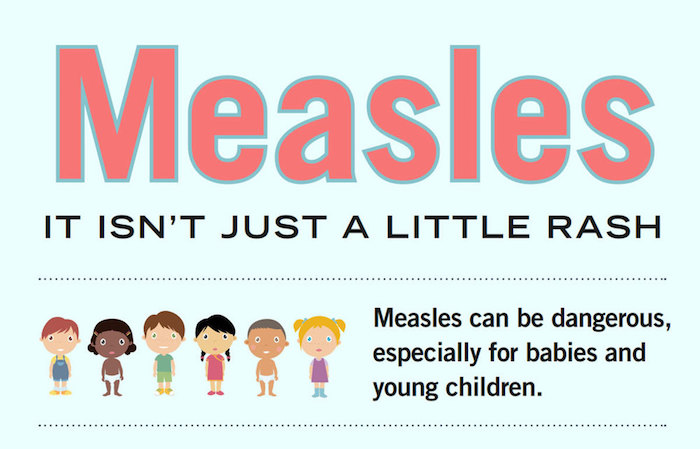
It has been a quarter century since measles was officially eliminated in the U.S. Yet here we are in 2025 seeing a resurgence. Numerous cases have been reported in different states which are giving health experts great cause for concern.

As of mid-May 2025, there were more than 1,000 new cases of measles and three measles-related deaths in the U.S., surpassing the 285 cases reported for all of 2024, according to public health statistics.

Researchers at Stanford University just published an article in the Journal of the American Medical Association which suggests that with the current level of immunizations, measles would return to endemic status with more than 850,000 cases in 25 years.


WHAT ARE MEASLES AND WHY ARE THEY SO DANGEROUS?

Measles is a highly contagious airborne virus which can lead to serious complications like ear infections, pneumonia, and brain inflammation (encephalitis) which can be fatal. Children are obviously the most vulnerable but it can affect people of all ages, especially those whose immune systems are weak.

According to Jay Varma, MD, an epidemiologist and primary care physician in New York City “The healthcare delivery system is not prepared for the resurgence of measles.” Measles is twice as contagious as COVID-19 so given what occurred during the recent pandemic it is very likely that a measles epidemic would push the healthcare system beyond its capacity.


WHY ARE MEASLES ON THE RISE AGAIN?

There is a lot of misinformation out there about vaccines which has resulted in reduced vaccination rates in some communities. That is further compounded by recent policy changes that have taken place in Washington some of which have been spearheaded by the new director of Health and Human Resources who has openly questioned the need for various vaccines,

When it comes to your family’s health we believe it is vital that you always check with your healthcare provider for the best advice.

A recent medical report  based on research in the UK and published in the American Journal of Public Health revealed no relationship between increased risk of allergic problems such as asthma or eczema (a skin condition) and childhood vaccinations.

Researchers have been looking for possible causes of a known increase in allergic diseases in the developed world and have looked specifically at those increases related to vaccinations.

A study involving nearly 30,000 children who have been followed for up to 11 years was conducted by public health experts, looking for this supposed link.

The vaccines involved were those for diptheria, polio, pertussis and tetanus (DPPT,) measles, mumps & rubella (MMR).

Study results could show no significant increase in the incidence of allergic diseases as a result of the above-mentioned vaccines.  They did acknowledge that “a minority of children who rarely seek care” showed some increased risk for allergies.  This very limited association “is more likely to be the result of study bias than a biological effect.”

If you have questions regarding the safety of infant & childhood vaccinations,  speak with your pediatric specialist for more information.