It has been a quarter century since measles was officially eliminated in the U.S. Yet here we are in 2025 seeing a resurgence. Numerous cases have been reported in different states which are giving health experts great cause for concern.

As of mid-May 2025, there were more than 1,000 new cases of measles and three measles-related deaths in the U.S., surpassing the 285 cases reported for all of 2024, according to public health statistics.

Researchers at Stanford University just published an article in the Journal of the American Medical Association which suggests that with the current level of immunizations, measles would return to endemic status with more than 850,000 cases in 25 years.


WHAT ARE MEASLES AND WHY ARE THEY SO DANGEROUS?

Measles is a highly contagious airborne virus which can lead to serious complications like ear infections, pneumonia, and brain inflammation (encephalitis) which can be fatal. Children are obviously the most vulnerable but it can affect people of all ages, especially those whose immune systems are weak.
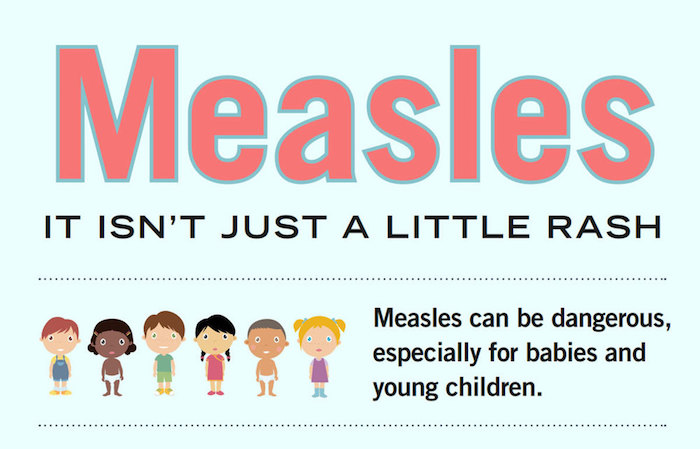
According to Jay Varma, MD, an epidemiologist and primary care physician in New York City “The healthcare delivery system is not prepared for the resurgence of measles.” Measles is twice as contagious as COVID-19 so given what occurred during the recent pandemic it is very likely that a measles epidemic would push the healthcare system beyond its capacity.


WHY ARE MEASLES ON THE RISE AGAIN?

There is a lot of misinformation out there about vaccines which has resulted in reduced vaccination rates in some communities. That is further compounded by recent policy changes that have taken place in Washington some of which have been spearheaded by the new director of Health and Human Resources who has openly questioned the need for various vaccines,

When it comes to your family’s health we believe it is vital that you always check with your healthcare provider for the best advice.
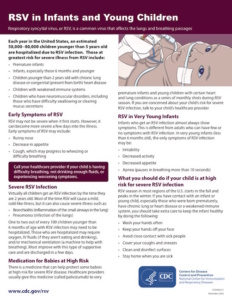
An urgent call has gone out to government agencies to assist in what is now a major health concern – the Syncytial virus (RSV).

In the latter part of November the CDC reported record breaking numbers of pediatric cases requiring hospitalization. Among children age 17 and under, nearly 12/100,000 have been hospitalized across the country. For infants under 6 months the rate is a very troubling 145/100,000.

Currently, there is no vaccine for RSV, only supportive care.

Children’s hospitals are specialty hospitals with a limited number of beds. According to national data – three of these hospitals have set up overflow tents to treat both RSV as well as influenza cases, and winter has just begun…

According to Pedro A. Piedra, M.D., professor of virology & microbiology at Baylor College of Medicine “RSV is the major global respiratory pathogen affecting children under age 5.” He adds that “almost half of the deaths occur in children under 6 months of life.”

Mark Wietecha, Children’s Hospital Association CEO, says “Our system is stretched to its limit and without immediate attention the crisis will only worsen.” The American Academy of Pediatrics has echoed a similar warning.

The request for national assistance “Would create flexibility for healthcare providers and systems, particularly regarding government funded programs such as Medicare, Medicaid and the Children’s Health Insurance program (CHIP).”


Please check with your pediatrician regarding how best to safeguard your little ones from RSV and other respiratory infections.


RSV IN INFANTS AND YOUNG CHILDREN

(in English and Spanish)


Hype or hyperbole? Headlines scare people, for sure. The number of coronavirus comments, articles and statistics can make you shudder. You might even purchase protective masks or simply stay home in fear.

Americans, much like many others, are actually at much greater risk from a virus which is here, now. This season, influenza (the Flu), has already claimed the lives of at least 40 children and it remains a far greater health concern for your family than any other communicable disease.

According to the Centers for Disease Control & Prevention (CDC) the flu has sickened 13 million Americans this winter, putting 120,000 of them in the hospital and has already taken 6,600 lives. The flu season has not yet peaked and when all data is in the flu may take as many as 61,000 American lives.

Protection from the flu takes a number of forms. Although imperfect due to the changing nature of viral illnesses, the flu vaccine is still your best hedge against this awful disease. According to the CDC, fewer than half of American adults got a flu shot last season. For children, who are more vulnerable to the respiratory effects of the flu, only 62% received the vaccine last year.

Dr. Paul Offit, director of the Vaccine Education Center at Children’s Hospital of Philadelphia believes that because the exotic viruses from foreign lands have such different and scary names (Ebola, Zika, Wuhan, etc.) we fear them even more than our generic annual flu strains. When the SARS virus caught our attention, causing a global panic, the U.S. “dodged a bullet” according to the CDC with only 8 Americans becoming infected. There were no deaths from SARS in the U.S. Yet, it caused panic on a global scale.

Children are most often hit the hardest with the flu and statistics reveal that most kids who die from the flu virus have not been immunized against it. Many of these children were previously healthy.

Protection from the flu not only includes getting vaccinated. If you or a family member develops a fever, body aches, headache and/or cough they should be seen by the family physician and screened as early as possible for the flu. Early detection is essential as there are anti-viral medications that can be prescribed to lessen the negative impact.

Other simple methods of disease prevention include keeping sick individuals at home, frequent hand washing and covering ones mouth when coughing.