Tag Archive for: Allergies

In case you haven’t noticed there have been some rather ambiguous statements made by the Centers for Disease Control and Prevention recently regarding previously accepted standards for certain vaccines for infants.

The most recent of these statements and recommendations come from the CDC’s Advisory Committee on Immunization Practices. Specifically, they are referring to the hepatitis B vaccine for infants. The committee voted to make vaccine recommendations “based on the mother’s testing status.” So, if a mother tested negative for hepatitis B parents should decide, with the guidance of their doctor, whether the vaccine is appropriate for their newborn.

The Los Angeles Department of Public Health (DPH) criticized the decision and described it as “a return to selective, risk-based newborn vaccination”, which officials argued was “not based on new evidence suggesting that hepatitis B vaccine birth dose is unsafe or ineffective.” The DPH further argued that a “risk-based strategy” was shown to be inadequate more than 35 years ago, and can reintroduce preventable risks, in particular communities such as L.A. County where hepatitis B prevalence and risks are higher. Consequently, the county has decided to continue the current, science-based recommendation for hepatitis B vaccines for newborn.

To keep this in context, the new CDC recommendations are occurring while other vaccines for newborns are also being brought into question, in particular, the vaccine for measles which has also been questioned by the new CDC while there have been outbreaks in several U.S cities.

House Representative, Judy Chu, D-Pasadena, a member of the House Ways and Means Committee and Chair emerita of the Congressional Asian-Pacific American Caucus, criticized the CDC’s decision as “reckless and dangerous.” She added: “Asian Americans, Native Americans and Pacific Islander communities who make up only 7% of the U.S. population yet account for 60% of chronic hepatitis B cases. She argued that these vaccines have been life- saving protection for these communities.”

We strongly continue to suggest that all expectant and recently delivered parents speak frankly and honestly with their pediatricians regarding newborn vaccines for their newborn.
At a recent meeting of the American Academy of Pediatrics there was a wide-ranging discussion of popular myths about pediatric allergies. Discussions included topics such as First vs Second Generation Antihistamines, Local Organic Honey for Treatment of Allergies, How to Diagnose Cow’s Milk Allergies, Penicillin Allergies and Treatment of Hives.

Another issue, very relevant to breast feeding mothers, is whether there is a need to eliminate foods that might be passed along to infants in breast milk. The discussion was led by David Stukus, MD, a professor of clinical pediatrics in the division of Allergy and Immunology at Nationwide Children’s Hospital, Columbus, Ohio.

Stukus explained that breastfeeding mothers do not typically pass allergens to their infants in breastmilk, “so it is rare that a mother would need to eliminate anything from her diet if her baby experiences atopic dermatitis, colic, GI reflux or similar symptoms.”

Dr. Stukus also addressed other allergy-related misconceptions including:

  • There is no need to wait a certain number of days between introducing new foods to infants. He suggested letting babies explore new foods and textures at each mealtime and to reassure families that 95% of children never develop food allergies. In reality, he said, “early and ongoing consumption of different foods has the greatest likelihood of preventing food allergies.
  • Egg allergy is not a contradiction to the flu, measles, mumps rubella and yellow fever vaccines. Again, he is quoted…“Despite concerns about a theoretical risk that vaccines made using chick embryos could cause an allergic reaction, the evidence has shown otherwise, and allergy to a vaccine ingredient is not usually a contradiction to receiving it.”
  • When comparing first vs second generation antihistamines parents should consider not using diphenhydramine (Benadryl) in favor of newer antihistamines such as Zyrtec or Claritin as they have a quicker onset with fewer side effects. 

    It is vital that all young families speak with their own pediatricians regarding food allergies, various treatments, or any other issues that you are concerned about.

Most of us will likely be stung by a bee or yellow Jacket at some point in our lives. What should you expect if this happens to your little one?

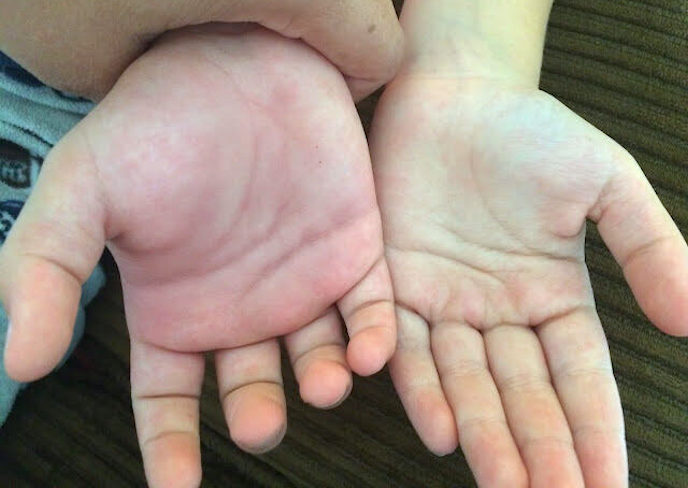
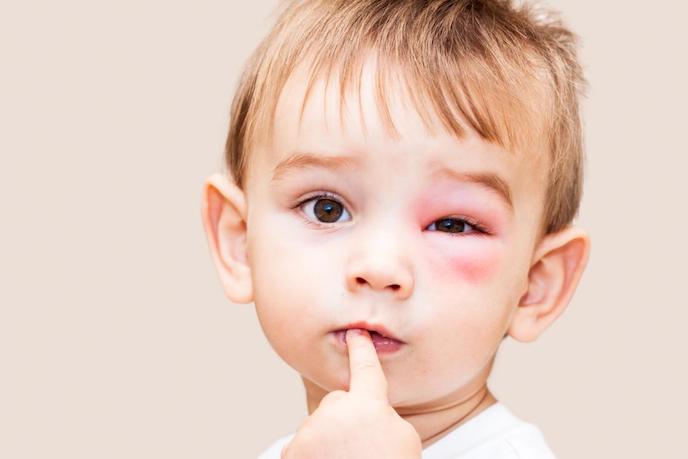
As you might expect, there will be some pain or discomfort at the site and it is usually accompanied by local swelling, a feeling of heat and itching around the location. On occasion, the swelling might move from one hand to the forearm. This is not that uncommon. Itching may continue for several days and can be alleviated by a cool compress to the area.

How do I remove the stinger?

The stinger itself is a hollow tube through which venom enters the body. The preferred method for removal is to use something firm like a credit card to sweep the stinger off from the side. Grabbing the stinger with tweezers or your fingernail will likely eject additional venom into the person.

What does a severe reaction look like?

The following reaction(s) to a bee sting that require immediate attention include:

  • Hives, in parts or larger sections of the body
  • Nausea/vomiting
  • Stomach cramps
  • Any swelling of the body not associated with the site…particularly in the neck, face, tongue that might affect breathing

Some reactions are not specific to the site itself. If there is some swelling elsewhere, consider using an anti-histamine such as Benadryl. The liquid version enters the body more quickly, plus many young ones cannot swallow a pill.

Continue to observe the person closely and if needed, go to a local emergency department.

What to do when the bite victim has a known, severe allergic history to bee stings

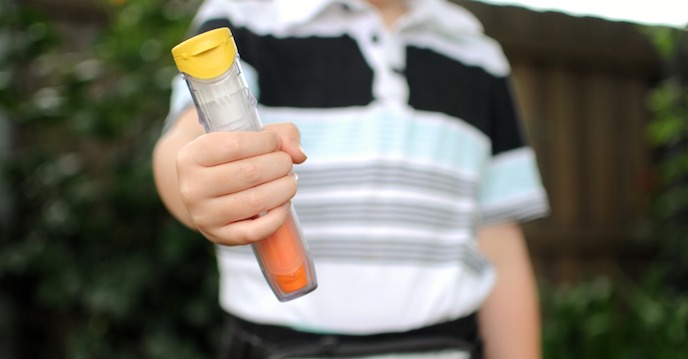
If the bite victim has a known, severe allergic history to bee stings you should expect severe symptoms within minutes. If an EpiPen is available, use it as directed, then call 9-1-1. Driving to a hospital under these circumstances has risks, including traffic accidents.

What is an EpiPen?

EpiPen is a commonly known brand name of an auto-injectable device that delivers the drug epinephrine, a life-saving medication used when someone is experiencing a severe allergic reaction, known as anaphylaxis.

Do I need an EpiPen at home, even if no one in the household has a known allergy?

Most pediatricians will not prescribe one unless there is a confirmed history of a severe reaction to any substance that could cause a life-threatening event.