We’re all accustomed to seeing infants and toddlers nod off when traveling in a car. The question is, how safe is it?
Although their car seat is angled back a bit, you will have noticed that when they fall asleep their heads inevitably fall forward. This is considered to be safe since the amount of pressure on their airway isn’t sufficient to stop breathing.
That being said, safety experts have known for some time that prolonged sleep in a car seat poses the risk of impaired breathing. This is due to the amount of pressure that the infant’s head puts on the breathing passage in a “hyper-flexed” or head down position. Infants, in particular, have large heads and small, very weak neck muscles making it impossible to hold their head steady, especially during sleep. Consequently, their head will usually fall forward during a car ride which can apply unsafe pressure on the airway making breathing difficult.
But just how long is it safe for a baby to slumber in that position? There seems to be some disparity among experts but most of them recommend no longer than one hour due to the possibility of reduced oxygen, while others extend that time closer to two hours.
So, if you’ve just pulled into your driveway and your little one is fast asleep, is it safe to let them sleep while you attend to other things?

Helen Arbogast, injury prevention manager at Children’s Hospital of Los Angeles, says no, especially for those under two years of age. The reality is that car seats are not designed for infants or toddlers to sleep in safely for an extended period of time. Ultimately, infants and toddlers are safest when sleeping in a crib or bassinette.
One question parents often ask us is what precautions we suggest if they are taking a longer road trip. Expert opinion suggests that either you have someone in the back seat with the child who can stimulate the infant periodically and/or make more frequent stops.
Be sure to pose the question to your pediatrician during your next well-baby visit.
In a related issue, Congressman Tony Cardenas (D-Panorama City) sponsored the passage of the Safe Sleep for Babies Act which passed both the house and senate. (Finally, something they can agree on!) The bill issues strict guidelines for crib safety that all crib manufacturers are now required to follow.
Updated June 06, 2025.
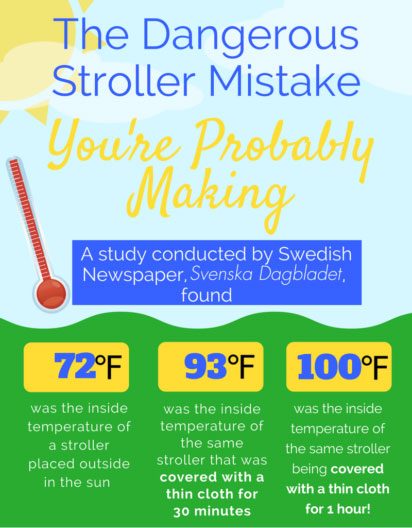 Based on an interview with Stockholm pediatrician Dr. Svante Norgren about the dangers of covering a stroller, the Swedish newspaper, Svenska Dagbladet, conducted an experiment by putting a stroller out in the sun, midday, in the summer. Without a cover, the stroller was about 72 degrees Fahrenheit. After covering the stroller with a thin cover for 30 minutes, the temperature rose to 93 degrees and after an hour, 100 degrees!
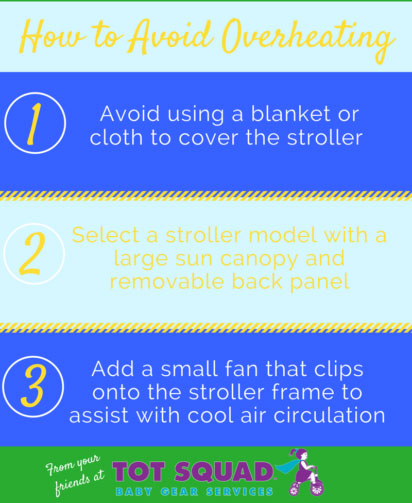 Dress children lightly, use plenty of sunscreen, and keep them well-hydrated. Sponge your child with a damp cloth to keep them comfortable. A small clip-on fan can be attached to their stroller for added circulation – just be sure to keep it out of reach.