Tag Archive for: Toddlers

It has been a quarter century since measles was officially eliminated in the U.S. Yet here we are in 2025 seeing a resurgence. Numerous cases have been reported in different states which are giving health experts great cause for concern.

As of mid-May 2025, there were more than 1,000 new cases of measles and three measles-related deaths in the U.S., surpassing the 285 cases reported for all of 2024, according to public health statistics.

Researchers at Stanford University just published an article in the Journal of the American Medical Association which suggests that with the current level of immunizations, measles would return to endemic status with more than 850,000 cases in 25 years.


WHAT ARE MEASLES AND WHY ARE THEY SO DANGEROUS?

Measles is a highly contagious airborne virus which can lead to serious complications like ear infections, pneumonia, and brain inflammation (encephalitis) which can be fatal. Children are obviously the most vulnerable but it can affect people of all ages, especially those whose immune systems are weak.
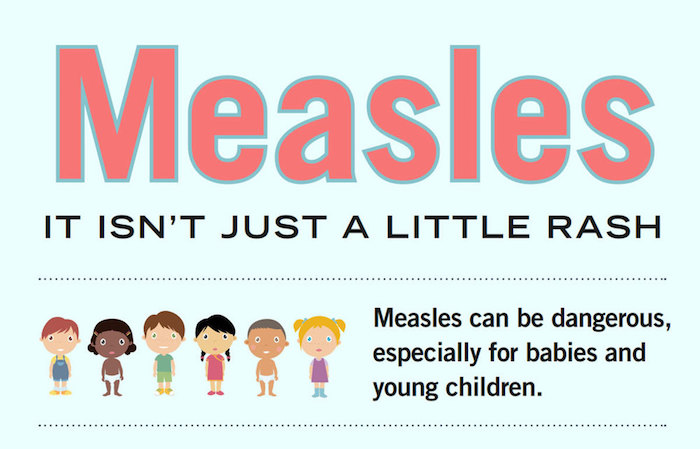
According to Jay Varma, MD, an epidemiologist and primary care physician in New York City “The healthcare delivery system is not prepared for the resurgence of measles.” Measles is twice as contagious as COVID-19 so given what occurred during the recent pandemic it is very likely that a measles epidemic would push the healthcare system beyond its capacity.


WHY ARE MEASLES ON THE RISE AGAIN?

There is a lot of misinformation out there about vaccines which has resulted in reduced vaccination rates in some communities. That is further compounded by recent policy changes that have taken place in Washington some of which have been spearheaded by the new director of Health and Human Resources who has openly questioned the need for various vaccines,

When it comes to your family’s health we believe it is vital that you always check with your healthcare provider for the best advice.


Choking is a very real threat and scary issue when it comes to infants, toddlers, and small children so it’s a rare occurrence if I don’t get questions in a CPR class regarding the use and benefits of anti-choking devices.

In a previous article, De-Choking Devices – Friend or Foe? we looked at some of the possible dangers and misinformation surrounding these devices. However, if you believe the promotions for the so-called Doctor Endorsed “Dechoker” or “LifeVac” anti-choking devices, you’re still likely to feel compelled to run out and get one immediately.

A closer look at the research and official recommendations for a choking baby or child, however, might have you come away with a different opinion.

First of all, it’s worth noting that the FDA’s recommendations do not include any of the above-mentioned devices. That holds true for the American Heart Association and the American Red Cross. Instead, they recommend that the first line of defense be the skills learned in an infant or child pediatric CPR class.

Why?

Responding to an actual complete airway obstruction requires quick action by a family member or trained care provider/nanny. Anyone responsible for the care of your baby or child must be prepared to act immediately and be well-versed in how to do so. Even a paramedic response may not be of any help because time is of the essence.

So, why not rely on an anti-choking device? They look simple enough to use.

In this video, the first in an excellent 4-part series, Dr. Darria Long Gillespie, an ER doctor and mom talks about the issues:

If you are a previous client of Save a Little Life you have learned the necessary skills in class. A reminder, the standard protocol is either back blows and chest pushes for an infant or a measured Heimlich Maneuver for toddlers or older children. If you were to discuss this with your pediatrician, she/he would tell you that those skills are the most important responses for complete obstruction.

If those methods do not work, then as a last resort you might consider the use of an anti-choking product.

In every class we preach the following prevention methods which should be part of your daily choking prevention routine, including:

  • Do not leave the self-feeder alone during mealtimes
  • Once able to crawl or walk do not give them any food or snacks and only do so when in a proper highchair
  • Do not provide food or snacks in the car until they are much older
  • Try to avoid overreacting to gagging episode(s) but if you feel the need to go into a small mouth, always go in along the cheek line and then sweep across. This will avoid an accidental episode of pushing food into their airway

Again, anyone with care responsibilities for a baby or child must know the proper skills…without exception.

For an in-depth comparison and investigation of the most popular anti-choking devices be sure to view the Dr. Darria’s complete series on this topic: Part 1 Part 2Part 3 Part 4


If you’re interested in refreshing your CPR skills or are a first-time parent wanting to learn, please contact us for more information

VISIT OUR CALENDAR FOR UPCOMING CLASSES

The L.A. Times recently ran an article on the rising increase of dog bites that are sending record numbers of us to local Emergency Rooms. The numbers are actually quite troublesome.

A recent study cited 48,596 ER visits that were related to dog bites, a number that reflects a 12% increase from the previous year and 70% higher than 2005. That equates to 125 ER visits for dog bites per 100,000 California residents.

Why the increase?

As many a 45% of American households now have at least 1 dog. That number is higher than it’s ever been owing to the large number of adoptions that took place during the pandemic when people were suffering from isolation.

Some dogs, like people, respond to unusual stress with aggressive behavior but unfortunately, the initial warning signs may go unnoticed. According to the article, a large number of puppies (and adult dogs as well) were hastily adopted during the pandemic and never properly socialized which has resulted in unaddressed behavioral issues.

State figures and a recent study by public health researchers show that, in California, children and young adults are the age groups most likely to make ER visits for dog bites.

The most serious injuries often involve the head and neck, making little children especially vulnerable. Nationwide, children under 5 were more than twice as likely to die from dog bites as members of other age groups.

What to look for?

Canine aggression occurs “on a ladder” of escalating behaviors and not all of them are obvious unless you know what to look for.

Easy to remember are the 5 Fs:

  • fret
  • fidget
  • fight
  • flight
  • freeze

Initial signs of discomfort also might include lip-licking, looking away, or yawning. The behavior starts to escalate when the dog begins stiffening up, staring, or crouching with a tucked tail. And things can worsen if an active toddler or small child gets too handsy.

According to Elizabeth Stelow, chief of the Behavior Service at the UC Davis Veterinary Medical Teaching Hospital,  owners should learn to recognize anxiety in dogs and understand their body language. When dogs owners repeatedly miss the signs of distress, biting may occur.

Dogs who are punished regularly are  also more inclined to bite. Negative feedback such as collars that deliver electronic stimulation, choke chains, and/or pronged collars were also identified in the article as another source of great stress.

Although aversive techniques appear to work by subduing the animal’s behavior, that result is often deceptive. Fear-based learning can push dogs to stop engaging in any behavior, good or bad, as the dog becomes fearful of a negative response.

The American Veterinary Society of Animal Behavior encourages owners to focus on positive reinforcement, rewarding dogs for what they do right. Motivating good behavior with treats, toys, verbal praise, and other positive choices make for a much happier and better-behaved pet.

Be sensitive to any signs that might lead to aggressive behavior.

Dogs are such an important part of our family, our lives, and our wellbeing. Let’s make sure that we equally value the wellbeing of our canine friends.