IS THE REVISED VACCINE SCHEDULE IN EFFECT YET?

In January, President Trump and the head of Health & Human Resources, Director
Robert F. Kennedy Jr. issued a proposal for a revision of the vaccine schedule for infants and children. Rather than following the standard ACIP evidence-review cycle, the 2026 federal immunization schedule was developed through a separate assessment commissioned at the executive level.
Despite the fact that the schedule of the (AAP) American Academy of Pediatrics continues to recommend vaccines protecting children against 18 specific diseases, maintaining the full scope of immunization guidance that pediatricians have relied upon for decades, under the new federal framework the number of vaccines recommended for all U.S. children was reduced from 18 diseases to 11.
Subsequent executive orders further urged separating combination shots (like MMR) into individual visits when feasible, though major medical associations continue backing comprehensive guidelines.
The proposal cites a need to bring U.S. vaccine rates in line with “peer nations” and points to Denmark as an example.
Scientists, however, disagree, arguing that:
- Denmark is an outlier in that is has a small homogenous population (6 million) and a highly centralized system where monitoring disease outbreaks are much different so the comparison of the two nations is without merit and is not logical
- Conditions in the U.S. are uniquely different than those of the wealthier nations (Canada, the UK, Western and northern Europe (Sweden, Finland, Denmark)
- These countries all have centralized healthcare systems that guarantee universal access to care throughout life and monitor illnesses differently

There are 18 diseases included in the current vaccine schedule. Seven of them have been eliminated from the proposed revision. (See Numbers 12-18 )
- Diphtheria – A serious bacterial infection affecting the mucous membranes of the throat and nose.
- Tetanus (Lockjaw) – A severe bacterial disease causing painful muscle spasms.
- Pertussis (Whooping Cough) – A highly contagious respiratory tract infection.
- Polio – A disabling and life-threatening viral disease that can cause paralysis.
- Haemophilus influenzae type b (Hib) disease – A bacterium that can cause severe illness, including meningitis and pneumonia.
- Pneumococcal disease – Infections caused by bacteria leading to pneumonia, blood infections, or meningitis.
- Measles – A highly contagious viral infection characterized by a generalized rash and high fever.
- Mumps – A viral infection affecting the salivary glands.
- Rubella (German Measles) – A contagious viral disease marked by a distinctive red rash.
- Varicella (Chickenpox) – A highly contagious viral disease causing an itchy, blister-like rash.
- Human Papillomavirus (HPV) – A common sexually transmitted virus linked to multiple cancers.
- Influenza (Flu) – A common seasonal viral respiratory illness.
- Hepatitis A – A contagious liver infection caused by the hepatitis A virus.
- Hepatitis B – A serious liver infection caused by the hepatitis B virus.
- Rotavirus – A contagious virus causing severe watery diarrhea and vomiting in infants.
- Respiratory Syncytial Virus (RSV) – A common virus causing respiratory tract infections, particularly severe in infants.
- COVID-19 – Respiratory illness caused by the SARS-CoV-2 coronavirus.
- Meningococcal disease – Severe bacterial infections causing meningitis or blood infections
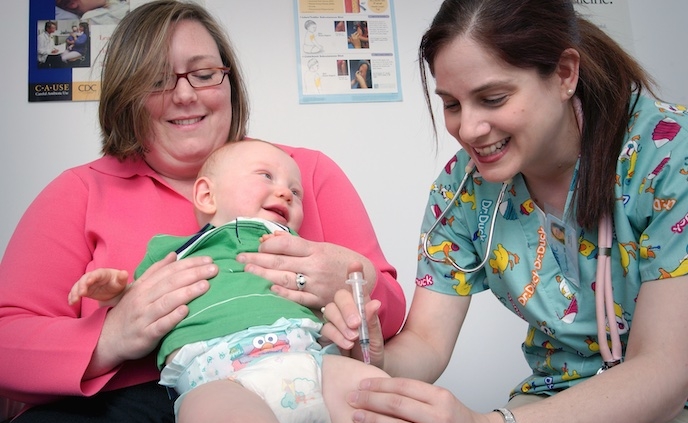
There is no data that shows that spacing the MMR (measles, mumps, rubella) vaccines is beneficial. And there are those who strongly believe that the space in-between these vaccines would place more children at risk during these delayed periods.
Much of the debate is centered on the notion that vaccines are responsible for our national rates of autism. In case parents are unaware of the alleged connection, it is important to acknowledge that the “study” which supposedly makes the link between certain vaccines and autism was based on a 1988 article in the British medical journal The Lancet. That study, which was based on findings from 12 children – was thoroughly discredited and its principle author lost his medical license due to allegations of serious medical misconduct (our emphasis).
The incidence of autism is now around one in every one hundred children in the U.S.
Some medical experts and environmental scientists are of the belief that elevated exposure to a variety of environmental toxins including micro-plastics, food additives, chemical pollutants and even unsuspected viruses or organisms can genetically affect susceptible children.

The truth is that we really do not know for sure.
Without a doubt, the incidence of autism is a genuine and growing issue of concern, but it requires real science conducted by real experts to establish what the best and safest choices are for parents.
As of July 2026, the federal recommendations have been “stayed” by a federal judge, and the CDC is recommending its 2025 guidance that includes 18 diseases. What this means is that the established schedule remains in place while the courts resolve the matter.
The best policy is to talk honestly with your pediatricians. Sharing information results in informed decisions. That is how we arrive at the best plan for keeping our little ones as safe as possible while protecting them from infectious diseases.

